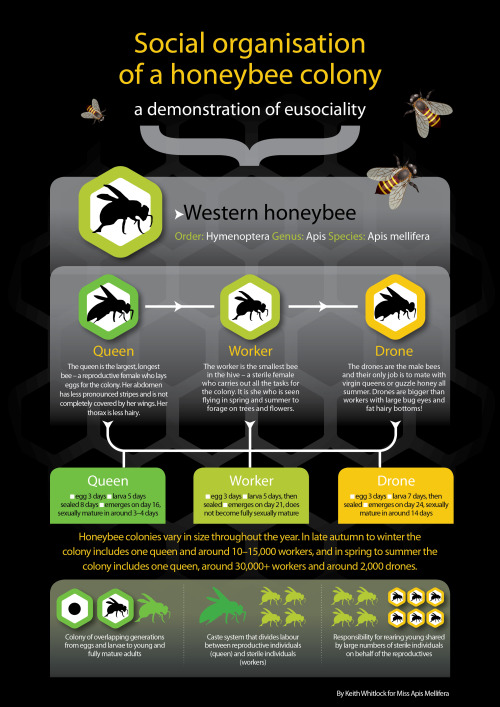
What it takes a honey bee colony to make 16oz of raw honey
MahakoBees Beekeeping Videos – 16oz (450g) of honey and all that is required from the honey bee colony to make it. Bees work hard to make honey. We enjoy it and this infographic shows how much work it actually takes. We need to take care of our bees and help beekeepers. Please support our bee life saving initiatives by supporting us on PATREON with a donation for each beekeeping video we produce on a regular monthly frequency. Any amount is appreciated. Click this link to see how you can help. Thank you. MahakoBees
DRONE sentenced to death by Drone Eviction. Unique bee behavior. See the worker bee chew on her brothers wings and evict him from the HIVE. Our Beekeeping 101 YouTube channel has many interesting beekeeping videos and articles. Come and check it out and help our beekeepers save our bees which are currently under great threat from pesticides, pests, viruses and colony collapse disorder! Once thee bees go, we will struggle to feed ourselves.
This video was a lucky take, as it shows a closeup of the bee hive entrance as the worker bee evicts her brother the drone from their colony. It is winter here, and the bees are still evicting their drones mercilessly. As the queen bee reduces her egg laying activities, the worker bees forcefully push the drones out of the bee hive.
The male drones don’t have a stinger and as such, are powerless against the worker bees (their loving sisters) even though they are 30 percent larger in mass. Only a few will remain in the hive as a precautionary backup plan should the queen fail to continue to lay eggs for any reason. The worker bees would kick off the supersedure process and immediately begin nursing an egg into a new queen. Several of them at a time in fact and the first one would typically kill the others before they hatch by stinging the queen cell with her stinger. Only the queen can sting repeatedly without loosing her venom sack. The queen stinger lacks the return hooks and is more like a wasp stinger. the Queen stings rarely though otherwise.
So, as this video shows, beekeeping is a very interesting hobby. Should you be considering joining the beekeeping industry, come and visit our beekeeping YouTube channel and web store for more information as to what beekeeping entails, what to expect, helpful information on how and why to get started and visit our store for useful books, tools of the trade, even the hives and all things related to beekeeping
We invite you to subscribe to our channel and appreciate all thumbs up.
DIY MULCH from a BANANA tree – Save money and make you own mulch. NEW http://ift.tt/1q4NHBv VIDEO
DIY MULCH from a BANANA tree – Save money and make you own mulch. If you have a banana tree, you know that there is a lot of leaves and spent banana tree trunks you need to deal with. It is best to use a machete to cut the banana tree down (a banana tree is in fact a herb, rather than an actual tree). You will need a good quality and very sharp machete to do this as the banana trees can get quite large. If you need assistance with finding one, here is a couple of links to machetes we found to be great:
After a banana tree trunk fruits, it no longer produces any fruit, so it is important to cut it down so the tree can use its energy for new shoots and subsequent fruit. As you can see in the video, we cut the banana tree down, strip the leaves, and place the trunk on grass. Then we use the machete to cut slices off the trunk. those we then cut in halves or smaller pieces. The banana tree consists of cardboard like layers, much like onion rings, but each ring is a dense cardboard like structure, making it an excellent heat and water insulator. It is also far superior to any hay or grass clippings as it lasts much longer in your garden. We place these under and around our trees and the veggie gardens to prevent water evaporation and reduce the growth penetration of weeds.
Give it a go. Its fast, easy, and free saving you money and you no longer need to go to the tip either. A win no matter how you look at it. So if you have a green thumb, have a banana tree and own a machete, give the DIY Mulch from banana trees a go.
If you enjoy our videos and we have helped you or entertained you in the very least, please share, subscribe and hit the thumbs up button. We appreciate it.
Have a great day!
MahakoLife
Visit our sister site for fantastic BeeKeeping related videos on http://ift.tt/1opiWHi
Cute – thanks for sharing. We plan to run similar beekeeping for kids activities. Support our efforts on Patreon where every small contribution counts. Thank you. MahakoBees
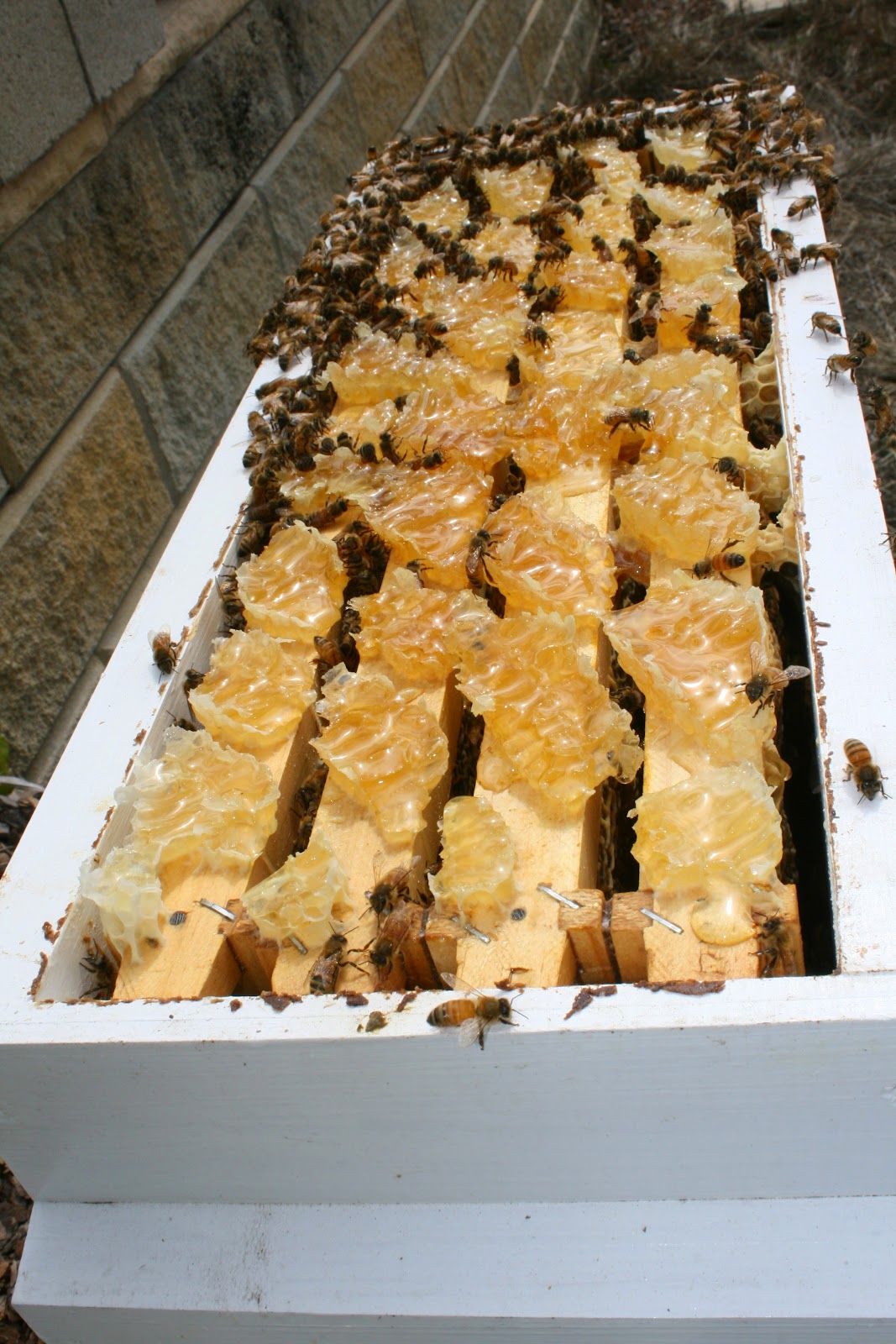
Nuc box beehive with free form honeycomb built by our super productive bees. Get the nuc box from our beekeeping supplies store and decorate it to your liking too. Post a pic!
NEW VIDEO – Custom Made Nuc box BEEHIVE decorated by bees themselves. http://www.mahakobees.com/store.html looks briefly at our custom made beekeeping nuc hive which our hyperactive and super productive honey bees filled to the brim with burr comb and golden honey. We also show you a close up of our handmade wooden hive entrance reducer which assists new bee colony splits in protecting their hive entrance until they grow in numbers.
So when would a budding beekeeper use such a small beehive, or a nucleus beehive? These hives are typically used for splitting your colonies or to relocate a small swarm of bees if you are lucky enough to find one. The beehive itself can come in many forms, shapes and sizes. Standard width is 4 or 5 Langstroth style full depth frames and the beehive body itself is usually made out of wood, much like a normal full size brood chamber would be with an entrance and a top cover. There are also polystyrene and cardboard versions available in various local beekeeping supplies outlets, but these are used for transportation generally. The nucs can also be user to raise queens if you have lots of beehives and want to save money on re-queening.
Custom Nuc Beehive
Custom Nuc Beehive – Honey overflow
Once you order one (or better yet, make one), it is usually flat packed like other timber beehives and needs to be assembled. It functions exactly the same way as a normal full size hive would, but the space is smaller and most importantly, the hive entrance is much smaller in width, which enables the new guard honey bees to protect the colony from being robbed, attacked or invaded by pests such as the wax moth and small hive beetles. We add an additional adjustable hive entrance reducer which further restricts the opening because the bees in their first few days after migration only have a few guard bees available for beehive protection, so the reducer helps by reducing the opening further minimizing their exposure to external threat. Once the colony fills up all the frames and you have a healthy fertilized and laying queen, you can either migrate them to a full beehive or add a second level to the nuc beehive. You will need to make that decision depending on where you live and how strong your bee colony is as well as other factors such as the season you are in, availability of food and flowering plants, and availability of your beekeeping equipment.
Productive Beehive burr comb
If you are interested in splitting your hive and making your own bees and expanding you beehive apiary or would like to try rearing your own queens, or you just like the look of our hives, come and visit our simple online beekeeping supplies eStore at: http://www.mahakobees.com/store.html and have a full beekeeping beginners kit or just few tools shipped to your door today.
We appreciate your support and invite you to click the thumbs up, share and subscribe if you enjoy our content. Thank you for visiting.
Music composed, performed and provided by Groovey – Adam Kubát a Pavel Křivák. You can visit their website on: http://www.groovey.cz/
Also, a big thank you goes to Kevin McLeod for providing his royalty free music “Sidewalk Shade”. We appreciate your kind contribution – (incompetech.com).
NEW BEEKEEPING VIDEO. Review of a BEE SAFE Diatomaceous Earth Small Hive Beetle trap, which is a bee safe non-toxic Physical Insecticide. Especially the super fine Absorbacide ultra fine dust less than 15 microns in size – which acts like razor blades to the small hive beetles outer casing. Once the hive beetles outer wax coating is compromised, it dries out and dies quickly. As it is a physical insecticide, the beetles will not build up a resistance to it. Diatamaceous Earth DE is a relatively safe insecticide to use for the control of the little pest hive beetles, however, in larger amounts, it can also kill your bees. So use it wisely and carefully. Still, the crystalline silica shards are non toxic, which to us is a whole lot more acceptable for use in our apiary than their chemical based counter parts. DE does not present any health hazards and has been approved by CSIRO for organic food producers. Other alternatives include oil based traps, such as the AJ Beetle Eater, or Beetle Blaster trap or similar under hive IPK Screened Bottom Board & Small Hive Beetle Traps that also work well. These contain vinegar and oil in a dark plastic trap which has small openings on the top and as the bees chase the beetles around the hive, the beetle enters the trap and can no longer escape. Fantastic traps, but a little too messy. Oil often spills throughout the hive, and need to be replaced, emptied or replaced. Not the most pleasant task a beekeeper has to do during a hive inspection. So, we are trialing this neat version of Diatamaceous Earth Small Hive Beetle Trap. Costs around a dollar per unit, is reusable, kills beetles over a long period of time if kept DE remains dry, is bee friendly and easy to handle even when propolized by the bees. Beekeepers can prepare the traps away from the beehive, and simply place them on top of their frames under the top cover for easy access and manipulation.
There are many great ways beekeepers deal with hive beetles and their control methods will vary widely. Similar traps can be homemade using a CD cover, a politicians sign, or any other similarly shaped containers. Let us know in the comments section below what methods you may have used or continue to use, especially if they work well. We’d love to hear from you!
Hope you can join us next time, and please subscribe, share and/or give us thumbs up if you have found our videos useful. We and the bees very much appreciate your support.