
29
Jun
21
Jun
small HIVE BEETLE beekeepers ENEMY! SHB beekeeping 101
small HIVE BEETLE beekeepers ENEMY! SHB beekeeping 101
View more videos on http://www.mahakobees.com
Small Hive Beetle is a common invader of the #Apis Mellifera or otherwise known as the European Honeybee. #SHBT is a small dark shiny black beetle that flies into the hive entrance at great speeds and therefore slip right past the guard bees. The small hive beetle is very destructive to any hive in greater numbers, but if you keep your hives strong, they will happily dedicate bee resources throughout the beehive to keep this intruder under control.
The small hive beetle (#SHB) does not like the light, so it is drawn towards the darkest areas of the hive, which are typically in the corners of the beehive, in crevices of the honey frames, under the top cover and off course in the darker empty comb cells. The bee colony, if strong, will designate many small hive beetle chasers which will keep the beetle cornered in a particular area. If the small hive beetle gets into the grasp of a bee however, it will tear it to bits or grab it and fly it out of the hive. If the bees however manage to trap the beetle in a single spot long enough, the beetle will die of dehydration and starvation, and we have seen the bees even create a propolized barrier around the beetle so it cannot escape.

Small Hive beetle SHB
SO why is the Small Hive Beetle such a big problem you ask? Well it lays hundreds of eggs throughout the beehive, into the empty cells, and the eggs and larvae appear to the bees as their own, so they continue to feed it well into its larvae stage, and that is when the beetle larvae will destroy the colony and the beehive unless it is strong enough to protect itself from the intrusion.
Beekeepers can help the bees by firstly managing their hives in a sustainable manner and visiting the beehives often and regularly to check on their beehives during their inspections. Each visit should reveal the state of the health and strength of the colony and the beekeeper should get an indication of the small hive beetle population. In our future videos, we will look at some of the traps #beekeepers use to trap the beetles. There are many options available, both organic and natural and chemical. The small hive beetle traps also come in many various shapes and sizes, and many beekeepers have spent many years investigating and trialing a way to prevent the hive beetles entry in the first place, which it seems, is still kind of a holy grail. We would be very keen to hear from any beekeepers out there that may have successfully created a barrier to entry so please post your comments below and lets share ideas on this topic that troubles most beekeepers the world over.
We hope you enjoy our videos and content, and we invite you to subscribe to our MahakoBees channel, click the thumbs up, and come back soon. We post at least once a week!
Have a fantastic day
MahakoBees
•Website: http://www.mahakobees.com
•Blog 1: http://mahakobees.com/blog/
•Blog 2: http://mahakobees.com/blog/
•Blog kids: http://beekeepingwithkids.blogspot.com.au/
•Youtube: https://www.youtube.com/user/mahakobees
•Google+: https://plus.google.com/+MahakoBees
•Facebook: https://www.facebook.com/mahakobees.mahakobees
•Pinterest: http://www.pinterest.com/mahakobees/
•Twitter: https://twitter.com/mahakobees
•Flickr: https://www.flickr.com/photos/125372235@N04/
•Stumbleupon: http://www.pinterest.com/mahakobees/
•Reddit: http://www.reddit.com/user/MahakoBees/
Music composed, performed and provided by Groovey – Adam Kubát a Pavel Křivák. You can visit their website on: http://www.groovey.cz/
Small Hive beetle,HBT,Mahakobees,bee,beehive,hive,how to remove hive beetle,hive beetle trap,apithor,hive beetle bates,removing hive beetles,stop hive beetle,help with hive beetles,hive beetle larvae,SHBT,why is my beehive dying,dead hive,colony collapse,hive management,beekeeping,beekeeper,beekeeping 101,beekeeping tips,beekeeping for beginners,starting beekeeping,first hive,bee hive,SHB
16
Jun
Bee smoker HOMEMADE BELLOWS – Beekeeping for beginners beekeeping 101
Bee smoker HOMEMADE BELLOWS – Beekeeping for beginners beekeeping 101
Bee smoker HOMEMADE BELLOWS. Visit us for all the videos at http://www.mahakobees.com. In this installment, we review a standard bee smoker and a homemade bellow replacement we found second hand. We found leather to be one of the best commercially available materials for beekeepers bee smoker as is is durable, long lasting, flexible, relatively fire resistant, and light. However, this very unattractive bee smoker is challenging the status quo. Yes, it is homemade bellows, yes it may be cheap, and yes it may look rather ugly, but boy we found it very practical on many levels and we understand why the creator made it the way he/she has. We purchased this bee smoker from a beekeeper that was retiring, and this was an item on the pile to be dumped. We picked it up for just a few dollars, if nothing, just to see how it worked and if it was useful. And it is. We can confirm, that this bellow, although rubber, and welded rather awkwardly, works very well and is not only practical but also long lasting. This bee smoker is more than 7 years old, and has been used in the field extensively all these years.
We find these benefits as explained in the video itself, it is light, comfortable, and mainly, it is easy to clean from the beeswax and propolis that usually builds up on the timber / wooden backing of a leather or synthetic leather bellow. So you cannot heat treat it, or easily remove the propolis/beeswax. This design reduces the glove/hand contact to just the thumb, and even then, the backing is metallic (i.e. steel) so it can be heat treated and scraped of with a spatula.
Here is some history on beekeeping bee smokers we have referred to in the past and a fabulous video produced by OutOfBlueSky that covers the history of bee smokers better than we ever could, so go and take a look. The video link is here:
https://www.youtube.com/watch?v=OR3U523TLgI
Enjoy your day
Music composed, performed and provided by Groovey – Adam Kubát a Pavel Křivák. You can visit their website on: http://www.groovey.cz/
Bee Smokers – excerpt from
http://keepingbee.org/bee-smoker-honey-equipment/:
Smoker for bees – a device that allows the beekeeper to create and send a stream of smoke to the right place.
Bee smoker has a simple structure: a metal cylinder — this is a furnace, which burns coal and generates smoke, small “forge” bellows blow air into the furnace, and a stream of smoke comes out the top of the smoker.
Bee smoker – honey equipment
Bee smoker as a honey equipment was established in ancient Egypt and the neighboring nations of North Africa. Then it was a clay vessel with two openings, reminiscent of a turtle. They pawned burning fuel through the large hole, the air was got by mouth, and the smoke escaped through a small hole. Such a primitive device is still used by the natives of Algeria.
The idea of fur smoker for bees belongs to an american beekeeper Hamet, who in 1870 gave a description of his proposed coarse and heavy instrument. For the formation of the smoke beekeeper had to push the bellows with both hands.
In 1883, the famous american beekeeper Kvivbi have created a more perfect instrument, but it has a major drawback: it’s bellows were connected directly to the camera for fuel. As a result the bellows quickly burnt.
Finally, the third american beekeeper Binh went further: he separated bellows from the furnace and smoker for the bees got the type that we use in the present. Certainly, the construction of bee smoker was improved over the years and now it is a comfortable, lightweight, durable, affordable device. Great contribution was made by such world-renowned beekeepers: Ruth, Lavinsky, Clark, Kenturi, Lynes, Rotshyuts, Tseringer.
Bee smoker.
Let’s look at some of the structural details of bee smoker. Seemingly simple device, and yet it is thoroughly planned.
It consists of two-walled cylinder, with one end it is closed down, and the other — has hinged on the hinge cover with the top of a truncated cone. This cone is a nozzle to direct the smoke.
Modern bee smoker is designed so that the fuel doesn’t fall out of the hive, mesh, inserted into the lid prevents it. On the bottom it also has a mesh, which prevents contact between the fuel and the bottom, so that smoker is not dangerous to put on the painted roof of a neighboring hive. In addition, this grid is used as a ashpan for heating.
Beekeeping smoker is used not only to work with the bees, but also for the putting certain medications to the notch. For these purposes, there are smokers with long nozzle.
09
Jun
How to clean STICKY propolized hive tool under 30 seconds – Beekeeping 101
How to clean a STICKY propolized hive tool under 30 seconds
– Beekeeping 101.
– Beekeeping 101.
Visit http://www.mahakobees.com for many more useful videos.
We show you one of the fastest methods to clean and sterilize your hive tool
after each beehive inspection. The beekeepers hive tool will be quite dirty,
sticky and have beeswax and propolis all over the tool. This poses a problem,
where the beeswax and propolis and honey itself may harbor dangerous infections,
diseases and parasites which you do not want to transmit, transfer or introduce
from one hive to the next. It is therefore very important that you clean the
tools between each hive visit.
We show you one of the fastest methods to clean and sterilize your hive tool
after each beehive inspection. The beekeepers hive tool will be quite dirty,
sticky and have beeswax and propolis all over the tool. This poses a problem,
where the beeswax and propolis and honey itself may harbor dangerous infections,
diseases and parasites which you do not want to transmit, transfer or introduce
from one hive to the next. It is therefore very important that you clean the
tools between each hive visit.
The method in this video we argue is the best, fastest and most
useful after both in your workshop and out in the field. So long as there are no
fire hazards or fire restrictions in and around your apiary, you can easily
carry a portable or pocket size butane blowtorch with automatic ignition switch
and your hygiene routine will be much faster and easier to implement between
each hive you visit.
useful after both in your workshop and out in the field. So long as there are no
fire hazards or fire restrictions in and around your apiary, you can easily
carry a portable or pocket size butane blowtorch with automatic ignition switch
and your hygiene routine will be much faster and easier to implement between
each hive you visit.
This may not be the ultimate solution, but it may be useful
to add it to your bag of tricks for your next visit, or after. When visiting
several hives in one inspection, you need to clean the tools for the above
mentioned disease related issues. You can have several clean and sanitized hivetools ready to go, one for each beehive, all separated in plastic zip lock
bags, or have a spray bottle with some 1 to 10 concentration of bleach and
water which you can spray onto your J hive tool and dry off with a rag or a
towel. This will however not remove any of the propolis, wax or honey, thus the
tool will remain sticky and still have the potential to carry diseases within
the beeswax and propolis globules even after it has been sprayed or submerged
in the bleach solution. This is a good starting point and is useful for washing
your hands and or beekeepers leather gloves, but it really is only a partial
solution, and does not remove the threat completely.
to add it to your bag of tricks for your next visit, or after. When visiting
several hives in one inspection, you need to clean the tools for the above
mentioned disease related issues. You can have several clean and sanitized hivetools ready to go, one for each beehive, all separated in plastic zip lock
bags, or have a spray bottle with some 1 to 10 concentration of bleach and
water which you can spray onto your J hive tool and dry off with a rag or a
towel. This will however not remove any of the propolis, wax or honey, thus the
tool will remain sticky and still have the potential to carry diseases within
the beeswax and propolis globules even after it has been sprayed or submerged
in the bleach solution. This is a good starting point and is useful for washing
your hands and or beekeepers leather gloves, but it really is only a partial
solution, and does not remove the threat completely.
So we think this butane blowtorch method is perfect, if not
the best way to achieve high level of sanitation and keep diseases at bay. It is
perhaps more difficult to carry a spray bottle and a towel, as it is to carry a
slim line propane blowtorch with an automatic self-igniting switch.
the best way to achieve high level of sanitation and keep diseases at bay. It is
perhaps more difficult to carry a spray bottle and a towel, as it is to carry a
slim line propane blowtorch with an automatic self-igniting switch.
One word of warning! You are dealing with fire, butane, and
extreme heat, so wear protection, take care and keep out of reach of children.
Beeswax is also a flammable substance, and your apiary will often be located in
long grass or at a forest edge, so always exercise caution and use this method
with utmost care. Your business insurance or home and content insurance may not
cover you.
extreme heat, so wear protection, take care and keep out of reach of children.
Beeswax is also a flammable substance, and your apiary will often be located in
long grass or at a forest edge, so always exercise caution and use this method
with utmost care. Your business insurance or home and content insurance may not
cover you.
We hope you enjoy our videos and invite you to subscribe and
provide feedback below so we can best meet your expectations of this beekeepingchannel. If there are particular beekeepers topics you would like us to cover,
send us an email.
provide feedback below so we can best meet your expectations of this beekeepingchannel. If there are particular beekeepers topics you would like us to cover,
send us an email.
Have a fantastic day.
Music composed,
performed and provided by Groovey – Adam Kubát a Pavel Křivák. You can visit
their website on: http://www.groovey.cz/
performed and provided by Groovey – Adam Kubát a Pavel Křivák. You can visit
their website on: http://www.groovey.cz/
06
Jun
Beekeeping with KIDS PLAYLIST: Where kids get involved in beekeeping activities – young future beekeepers.
Beekeeping with KIDS – a NEW playlist on our channel. Take a look!
We have a new playlist on our YouTube channel, which you can visit via our http://www.mahakobees.com website. The website is still under construction, however we are constantly creating new and interesting beekeeping videos and keep posting new content. We try to create videos that are unique, helpful and fun to watch. Its all about bees, beekeeping, honey, beeswax, propolis, pollen, nature, and many other family friendly content. We discuss the health benefits, the pros and cons, and the good and the bad of beekeeping, but this little update is all about the kids and beekeeping, so we would like to invite you to click on the playlist and let us know if you like them, have suggestions and feedback, and recommend new topics if you like.
We appreciate your time and look forward to having you as a permanent subscriber to our MahakoBees beekeeping for everyone channel in the future: https://www.youtube.com/user/mahakobees
04
Jun
Beekeeping 101 – HIVE TOOL review Beekeepers essential equipment
Beekeeping 101 – HIVE TOOL review Beekeepers essential equipment
Beekeepers HIVE TOOL review. We take a look at 3 hive tools. J shape hive tool, American style hive tool and the frame lifter/grabber hive tool with a scraper. Visit our MahakoBees channel at http://www.mahakobees.com for many great beekeeping videos. A hive tool is absolutely essential for any beekeeper. It should be part of the standard kit which includes a beekeepers suit, veil, and the smoker. The hive tool is used to open the hive lid or cover, to separate the honey supers and brood boxes, to break the seal on the queen excluder, to scrape off access propolis and wax, especially the burr comb, and to remove the honey frames and lift them out of the hive boxes. It can also be useful for cutting out undesirable honeycomb, queen cells, and to squash hive beetles.
There are many hive tools. Many styles, types, shapes and colours. Each is usually suitable for a specific job, situation, hive design or geographical locations. Some are large, some small, some painted and some stainless steel. It is therefore very hard to recommend any particular hive tool design, because each beekeeper will have their own preference, but in this video, we review the three we decided to use in the end, and we identify the one we would choose over any other. The J hook style beekeeping hive tool. It is light, flat, stainless steel, and it is simply the best performing tool we have ever used to date, for our situation.
If you like our videos, we invite you to click the thumbs up button, share, and subscribe. We appreciate your support and look forward to many more of your visits to our MahakoBees youtube channel.
Have a fabulous day.
https://twitter.com/MahakoBees
http://instagram.com/mahakobees
https://www.facebook.com/mahakobees.mahakobees
https://plus.google.com/100532733157161640639/posts
Music composed, performed and provided by Groovey – Adam Kubát a Pavel Křivák. You can visit their website on: http://www.groovey.cz/
Also, a big thank you goes to Train Robbin’Scoundrels for providing “their royalty free music “Murrow’s Boys”. We appreciate your kind contribution.
31
May
CRUSH, STRAIN, TASTE honey extraction method by our young beekeepers
CRUSH, STRAIN, TASTE honey extraction method by our young beekeepers
CRUSH, STRAIN, TASTE honey extraction method – a younger generation twist on the traditional crush and strain method. This video is rather emotional and will definitely bring a smile if not a tear into any beekeepers eye. In our view, almost every beekeeper is a very kind and considerate human being with a patient, family oriented, committed and loving soul. There is nothing better than engaging your children or grandchildren in the most rewarding activity known to man for centuries – beekeeping. And the fail proof way to get them started is to involve them in the simple honey extraction process itself. Yes, the good old crush and strain method. The little enthusiastic and motivated helpers in this video take it just that one step further though, which most seasoned beekeepers seldom do. They TASTE test the honey — frequently! They do this of their own accord, without any training, supervision, or enforced motivation. And they do this very often! Yes, honey must be good for you. The proof is in the pudding so to speak, or in this case, inside this honeycomb frame, and subsequently evidenced in this short video.
So, if you are ever presented with a chance to keep bees and would like to take up the challenge of becoming a beekeeper, even if it is a single small hive in suburbia or on a roof top in the middle of a busy CBD, we strongly recommend you do take up the challenge. Especially if you have little children or grandchildren you can share the beekeeping joys, pains and pleasures with. It will be the most rewarding hobby you will ever undertake, not only for yourself, but also for the younger generations. Sadly, not many young people consider beekeeping a hobby of choice and not many realise how important these social insects are to our way of live and our reliance on being at the top of the natural food chain.
Once you expose yourself and your kids to the amazing social honey bee phenomenon, your life will begin to change for the better of its own accord. You will be amazed with how bees live, grow, reproduce, manage and coordinate their activities within the colony, and you will begin to draw parallels between our human social networks. Ultimately, you will unavoidably become far more in tune with nature and respect it. You will seek improvements in your interactions with nature, your way of life, and the impact you as an individual have. Whether you like it or not, you will become a better person inside and we strongly believe your children will benefit too. They will not only benefit from the beekeeping hobby and related activities itself, but it will also bring you as a family closer together, get them away from the hypnotic wavelengths of television and computer games, and as they grow and learn, they will gain understanding that the sterile approach to nature that our modern way of life brings may need to be adjusted and improvements implemented. Hopefully, our future on this planet Earth will be more harmonious as a result… one beekeeper at a time.
We invite you to SUBSCRIBE to our channel and help us spread the word by clicking the thumbs up and sharing. We hope to see you for our next instalment in a weeks’ time.
Take care
Music composed, performed and provided by Groovey – Adam Kubát a Pavel Křivák. You can visit their website on: http://www.groovey.cz/
Also, a big thank you goes to Kevin McLeod for providing his royalty free music “Touching Moments Four – Melody”. We appreciate your kind contribution.
MahakoBees,crush and strain,cheap honey extraction,beekeeping with kids,kids and honey,honey,bee,beekeeping,is honey good for you?,is honey healthy?,benefits of honey,honey extraction,harvesting honey,honeybee,our first honey harvest,beekeeper,kids beekeeping,children and beekeeping,crushing honeycomb,how to extract small amounts of honey cheaply,cheap honey extractor,kids activities,family activities,kids friendly fun,raw food,organic honey,raw honey
26
May
BEESWAX CAPPINGS remove using a hot knife before extracting Beekeeping…
Beekeeping enthusiasts,
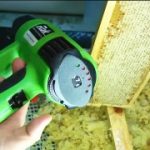
Our new video shows a closeup step by step instructional how to for young beekeepers where we show the beeswax uncapping process we follow to clean the frames, remove the cappings, and prepare the frame for extraction in a centrifugal frame extractor.
There are many ways beekeepers choose to remove the cappings from their honey frames. None of them can be considered the best or the ultimate, nor can any other methods be considered flawed. It is a very individual matter. Some hobby beekeepers use a hot know, some a steam knife, others use only the decapping fork or a simple kitchen serrated knife. And those beekeepers operating in larger beekeeping farms and apiaries with 20 or more hives tend to have automated machines that have spinning rotary blades or spikes that as the frames pass through, remove the top beeswax cappings. Some things to consider when starting out, is the volume of frames you are going to be processing. That will definitely have an impact on how you choose to remove the cappings. Other considerations may include your opinion and thoughts on say a hot gun may have on the quality of honey you produce. Another consideration is what to do with the cappings? Do you want beeswax? The work it takes to clean it, melt it, filter it and process it? Many don’t want the hassle and opt to scratch the cappings or use the heat gun.
As you get more familiar with your beehive and the honey frames you extract, you will find that the bees also produce varying shapes on the honey frame, and that too can be a problem and may alter your choice of beeswax decapping process you choose to try or adopt. In this video, we had a perfect frame, where the cappings were built outward by the bees and the cappings were ABOVE the actual timber frame. This makes it perfect for use of a hot knife, as the knife can be rested on the frames and simply slice off the wax cappings. Many frames however are not that way and the bees build them just below the full depth or height of the timber frames. In this scenario, a hot knife can do very little, and the only way to get the cappings off is to either scratch them or pull them off bit by bot using the decapping fork. This often leads to another debate we will cover in one of our future videos – should you use 10 frames or 9 frames in a full deep honey super? What are your thoughts? Leave us a comment below. Will the honey yield be higher or lower? Or the same? Will the hot knife cut through a much thicker overhang of honey comb? Will the running honey cool it too quickly slowing the whole process down? We are keen to hear your thoughts.
So as you can see, you will need to equip yourself with tools and skills to use them to accommodate several scenarios, each requiring a different method. Each honey frame will be different and may require use of two to three different styles even within the single honey frame.
We hope you enjoy our videos, and if you do, please click the SUBSCRIBE button. It helps us keep growing this channel and assist the much needed and very sparse new and young beekeepers. Hit the LIKE button and share.
We thank you for your support and hope you visit us again for our next video, where we will examine the use of a heat gun. Is this the method for you? Many say it is fantastically easy, fast and more efficient! We are keen to learn your thoughts on the matter after seeing our brief study.
Have an enjoyable day.
Music composed, performed and provided by Groovey – Adam Kubát a Pavel Křivák
You can visit their website on: http://www.groovey.cz/
23
May
Closeup look UNDER THE LID OF A BEEHIVE during a hive inspection – this is what you can expect
Closeup look UNDER THE LID OF A BEEHIVE during a hive inspection – this is what you can expect
Hello dear visitors and subscribers,
This weeks short video shows a closeup look under the lid of a beehive during our autumn hive inspection. This is what you can expect to see inside a twelve month old beehive all going well. Nice and healthy beehive with a strong colony, plenty of honey stores and a strong laying queen.
Any time we look into our hives, the first thing we get ready to catch a glimpse of is the number of hive beetles present as you lift the lid. This is critical to check. Any new or novice beekeepers out there, if you do not check in the first 3 seconds of lifting the hive top cover, you may not get a good understanding of the extent of the damage they are able to do.
We have quite a substantial problem ourselves, but we keep on top of it, squash as many as we can, and most importantly, we keep our hive very strong so they can dedicate enough bees to keep the hive beetle at bay. We use all sorts of traps, which we will cover in detail throughout the next few months. Keep your eyes out for that series, as once you lose a beehive to the hive beetle or the wax moth, (or FBT etc for that matter), you will never look into your beehive the same way. This series will be very extensive as one of our current projects is to review the hive beetle problem and as many have done before us, attempt to find a solution to the problem. The industry so far, it seems to us, deals primarily with the SYMPTOMS of hive beetle, but we would like to tackle the problem from the other end – successful prevention. This involves understanding hive beetles anatomy, life cycle, strengths and weaknesses. Once those are well understood, one can attempt to deploy strategies that may exploit one or several or in deed all of these. We are strong believers of using as little chemicals as and where possible, especially pesticides, and believe that nature has way to deal with every problem naturally. It may be less cost effective yes, possibly difficult to implement, and yes, perhaps not even commercially viable, but we are not a commercial beekeeping operation, and we care about our bees and those around the world, so every helping hand may assist, and who knows, the saying “Seek and you shall find”may in the end win over.
We hope you enjoy our videos, and invite you yet again to SUBSCRIBE, thumbs up, and share. Any comments and your time in publishing them is also greatly appreciated.
Have a fabulous day!
19
May
DEAD honeybee closeup but THE LEG TWITCHES??? – beekeeping 101 tutorial
DEAD honeybee closeup but THE LEG TWITCHES??? – beekeeping 101 tutorial.
We wanted to show a closeup of bee anatomy and picked up a dead honey bee in the apiary to do so. The bee was dead for at least 30 minutes, perhaps more. As we recorded the video over a few takes, all of a sudden, the dead bees leg started twitching. Very awkward moment, and rather unexpected. We gather this is normal and it is just the nerves, but none the less, it can surprise even beekeepers. In any case, the bees are a beautiful creature, a social animal that goes through an amazing number of phases in its life, and its skills, tasks and roles constantly change, right up to the last moment of its passing away. Bees are certainly one of the most amazing insects on planet Earth, and we should all study and respect them for what they are and what they do. Yes, all creatures contribute in many mysterious ways, but the bees (and ants and termites for that matter) seem to have a power we don’t yet possess. They are a completely independent creature, yet completely dependent on the social network they live within. They know nothing, yet know it all. They seek only the best for their beehive and not even fear of dying stops them from striving to achieve the greater good of the many and the cost of itself.
Hope you enjoy this rather sad video, but death is part of life, and the bees live theirs to their maximum potential, and we should celebrate that. Have a honey toast or a spoon of honey in your tea, and ponder what tremendous amount of energy and commitment went into that single delicious sweet nectar.
If you enjoy our content, we invite you to subscribe, click the thumbs up, and share the links. We also love to hear your comments, suggestions and feedback in general.
Make the best of your day too.
Music composed, performed and provided by Groovey – Adam Kubát a Pavel Křivák
You can visit their website on: http://www.groovey.cz/.
Also, a big thank you to Kelvin McLeod for his kind contribution of royalty free tune – Touching Moments Four – Melody. We appreciate your work.