08 Jan

Our new raw comb honey is all about that liquid gold, served in its most natural form. RAW COMB HONEY. It is untouched by human hands, unprocessed, unheated, unfiltered, without chemicals, sugar water additives or preservatives. Simply the healthiest natural raw food available for those interest in a healthy diet, all thanks to the hard work of Honey bees and the beekeeper taking care of his beehives and bee colonies. As colony disorder continues to cause much concern for beekeepers worldwide, few now dare to cut away the precious golden nectar with all that beeswax. It takes up to twenty kilos of honey to produce one kilo of beeswax. Keep that in mind when you purchase a true beeswax candle and appreciate all that hard work the bees put into it. Enjoy the smell, the beautiful honey aroma, and the long lasting burn.

Also, take the opportunity next time you visit your local fresh food market, and grab a sample pack of that beautifully fresh raw comb honey. You won’t regret it!

Hope you like our videos, and if you do, we invite you to subscribe to our MahakoBees or if you feel we deserve it, click the LIKE button below. We appreciate all comments and feedback so don’t be shy and let’s dive deep into the topic of bees, honey, beeswax and beekeeping as a hobby or in deed as a large and extremely important agricultural industry.
We appreciate all your support
MahakoBees

Music composed, performed and provided by Groovey Adam Kubát a Pavel Křivák. You can visit their website on: http://www.groovey.cz/.

You can read more about what Raw Comb Honey is below. Information is from Wikipedia:http://en.wikipedia.org/wiki/Comb_honey

Comb honey is honey, intended for consumption, which still contains pieces of the hexagonal-shaped beeswax cells of the honeycomb.

Before the invention of the honey extractor almost all honey produced was in the form of comb honey.[citation needed] Today, most honey is produced for extraction but comb honey remains popular among consumers both for eating ‘as is’ and for combining with extracted honey to make Chunk Honey. Hobbyists and sideliners can best develop their beekeeping skills by producing comb honey, which they can easily sell for several times its value as extracted honey. Comb honey production is more suitable for areas with a prolonged honeyflow from dutch clover, alsike, and yellow clover. Wooded areas are not very suitable for comb honey production, as bees tend to collect much propolis, which makes the harvesting of comb honey much more difficult. This problem has been largely circumvented with the adoption of specialized frames which prevent accumulation of propolis on saleable units.

Hive management[edit]

Beehive with Ross Round style comb honey super and frames exposed

Populous honey bee colonies are usually reduced to single hive bodies at the beginning of the honeyflow when one or more comb honey supers are added. Comb honey can either be produced in wooden sections, shallow frames, or Ross Rounds. The successful production of comb honey requires that the hive remain somewhat crowded without overcrowding, which leads to swarming. Young prolific queens help rapid colony population expansion with less likelihood of swarming. Caucasian Apis mellifera bees are often preferred for their tendency to keep a constricted brood nest and for their production of white wax cappings, making more attractive honey combs.

20 Oct

08 Oct

Beekeeping – how to SAVE your wired timber beehive frames


HOW TO Save your wired timber beehive frames.

All beekeepers know, that building and maintaining your beekeeping equipment such as beehive, timber frames, beeswax foundations, queen excluders and all the beehive related tools of the beekeeping trade is time consuming and costly. Here is a quick tip on how you, as a new beekeeper, can save yourself many hours of your time by saving the frames before each peak honey flow season.


Beekeeping Equipment - frames with foundation

Beekeeping Equipment – extracted honey frames from the beehive


It is recommended, that as part of your beekeeping frame rotation schedule within your beehive apiary, all your old drawn beeswax honey comb foundations extracted and removed at least once every 1 to 2 years to keep your hives and bee colonies within them healthy and disease free. The removal of the old comb reduces the potential for spreading diseases and keeps the wax nice and clean for each new beekeeping season. You can melt the beeswax comb, process it, render it, purify it, and reuse it for new foundation sheets, or to make candles, creams or other cosmetic products. We show you this process in a small home based backyard beekeepers way in this series: https://www.youtube.com/playlist?list=PLfE6cWwwWKog1Mx0wdsnkPbeIDvo-qPng.

So nothing goes to waste. The Honey Bees simply need to draw the new honey comb in the beehive body on top of the new beeswax foundation sheets, and use it either as honey stores or as the new brood frames in your lower hive boxes.

Solid Beekeeping Timber Frame

Click to view HOW TO make this Solid Beekeeping Timber Frame for your beehive

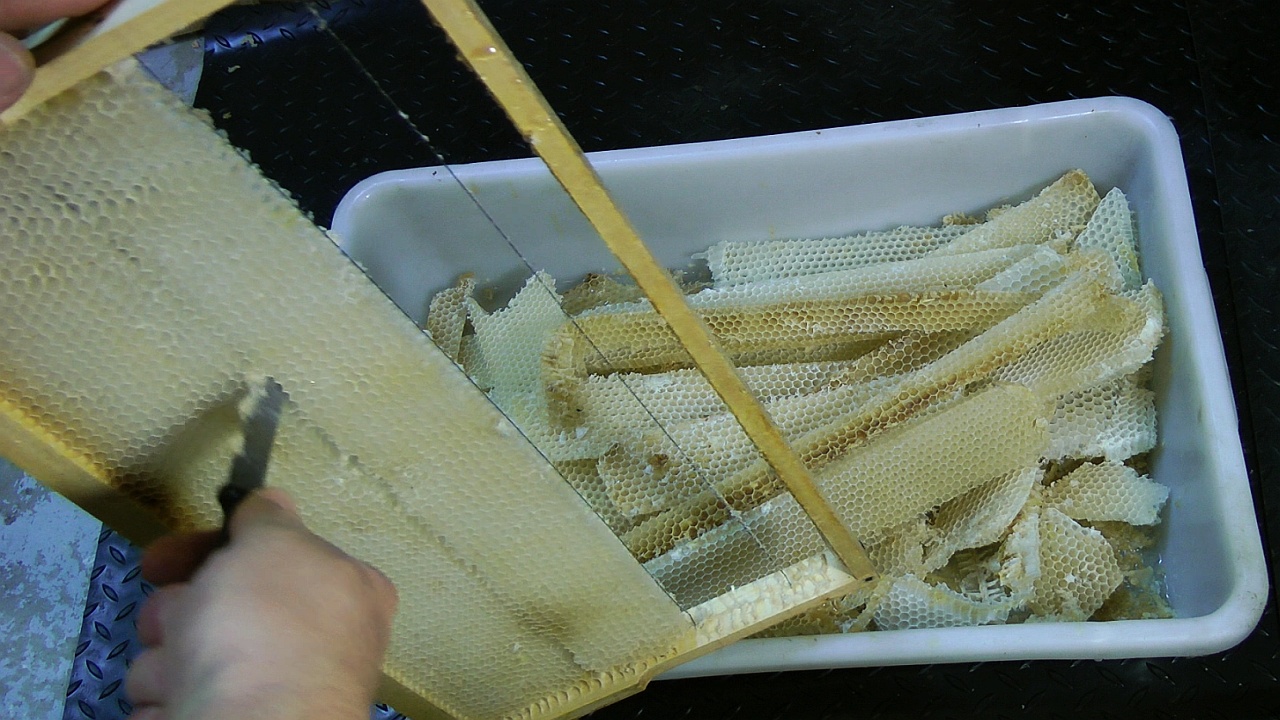
So, what are we suggesting? Simple. Firstly, watch our earlier video series on how to build a solid timber honey frame: https://www.youtube.com/watch?v=jRWxK2zc4qQ. Once you have a solid full depth honey frame assembled, add foundation and put the frame into rotation in your hives. A year later, once you extract the honey and the beeswax inside the honey frames becomes darker, use a sharp knife to cut along the inner edge of the timber frame, and then carefully cut the wax along the wires. Remove the strips of beeswax, melt, render and filter as required. The beekeeping frame should now be relatively clean of all beeswax. Then, use a heat gun or a blow torch to melt the remaining wax, and to kill any remaining parasites, wax moth eggs, and to coat the frames with the beeswax for protection. (See this video on HOW TO clean frames and kill wax moth eggs using a heat gun: https://www.youtube.com/watch?v=YwRAW7_xLw0). 

This will save you lots of time and effort by reducing the time spent on rewiring your frames and you get some wax for new foundation sheets as well. Not to mention, it will go a long way in saving you money by reducing requirements for treating diseases and controlling unwelcome parasites in your bee colonies in the apiary even if you sometimes mix and match the frames from one beehive to the next. So all in all, a worthwhile investment we think. 

Old retired Beeswax honey comb

Old retired Beeswax comb removal. It is not ideal to keep old comb in the beehive.

We invite you to share this video, click the thumbs up and to SUBSCRIBE if you enjoy our content. It goes a long way in helping our pollinators in crises as we continue to combat the phenomenon of bee colony disorder where our bees simply disappear in massive quantities. Thank you for visiting. MahakoBees.